
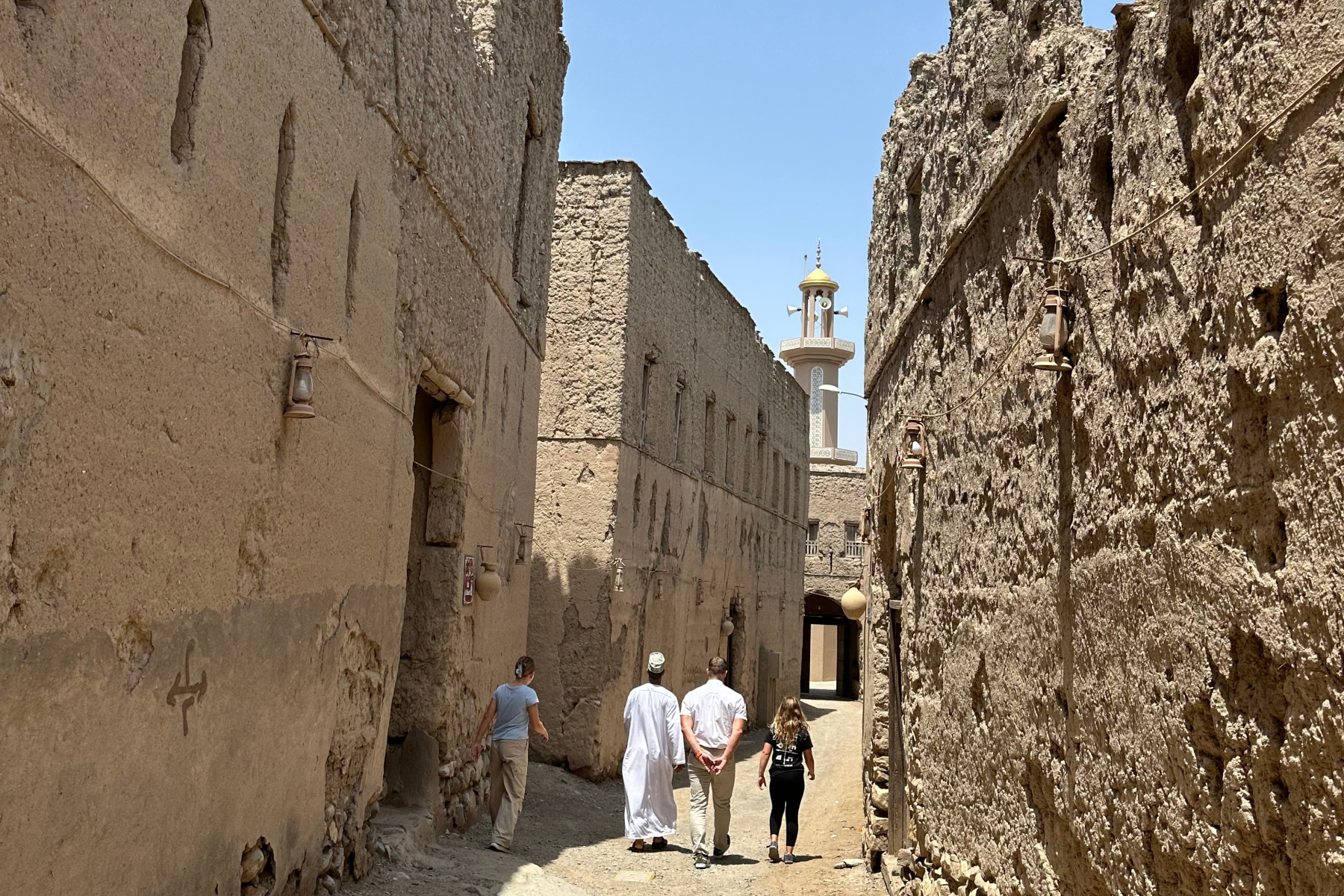
What to see in Rustaq: one of Oman’s historic capitals

Muscat hasn’t always been Oman’s capital city. Dynasty after dynasty of religious and royal leaders have moved their seat of power to suit the challenges of the day. Places like Rustaq, in the foothills of Jebel Akhdar, went from obscurity to economic and political renown, before again taking a backseat. Most tourists miss it, so let me introduce you to what to see in Rustaq.
But before the good stuff, I’d like to thank you for visiting Oman Wanderlust and also encourage you to join our Facebook group Oman Unpacked. It’s a community to get even more personal recommendations from visitors and expats who love Oman.
*This post contains affiliate links. If you click and buy something, I may earn some commission. This is at no extra cost to you but helps me cover the costs of running this website. See my privacy policy and disclosure policy for more information (links in footer).*
Why visit Rustaq?

While a lot of people venture South from Muscat to explore the coast, Wahiba Sands and the plateau at Nizwa, few set their compass West. Here is where you can find roads into the Hajar Mountains that most tourists never travel. The highway takes you from modern towns to mountain tracks leading to some of Oman’s hidden villages, nestled between peaks that can only be accessed by 4×4.
One of the entry points to these is Rustaq, an ancient capital of Oman and somewhere worth pausing before adventuring on towards Jebel Akhdar. For those less keen on an off-road experience you can still visit Rustaq as a day trip from Muscat or from the coast at Mussanah.
At first glance, this modern town might not look very different from the residential suburbs of Muscat. But dive a bit deeper and you will find history, hot springs and one of Oman’s more unique wadis where locals outnumber tourists.

Rustaq dates from before 200 AD when the Persians controlled this part of Oman. Its name means ‘large village’ in Middle Iranian – the language spoken here at the time.
The whole area between the base of the Hajar Mountains at Rustaq to the coast at Sohar was an important centre of international trade. Between 1624 and 1649, Rustaq itself became the capital of Oman under Imam Nasir bin Murshiad al-Yarubi.
Signs of Rustaq’s strategic importance and local wealth remain in the places you can see today.
If you are looking for a day trip from Muscat it’s an easy one to do in a 2WD, about an hour and a half from the airport.
What to see in Rustaq
We travelled to Rustaq a handful of times to visit a friend and enjoy the landscape. Based on our personal experiences, here’s what I recommend seeing:
Rustaq Fort
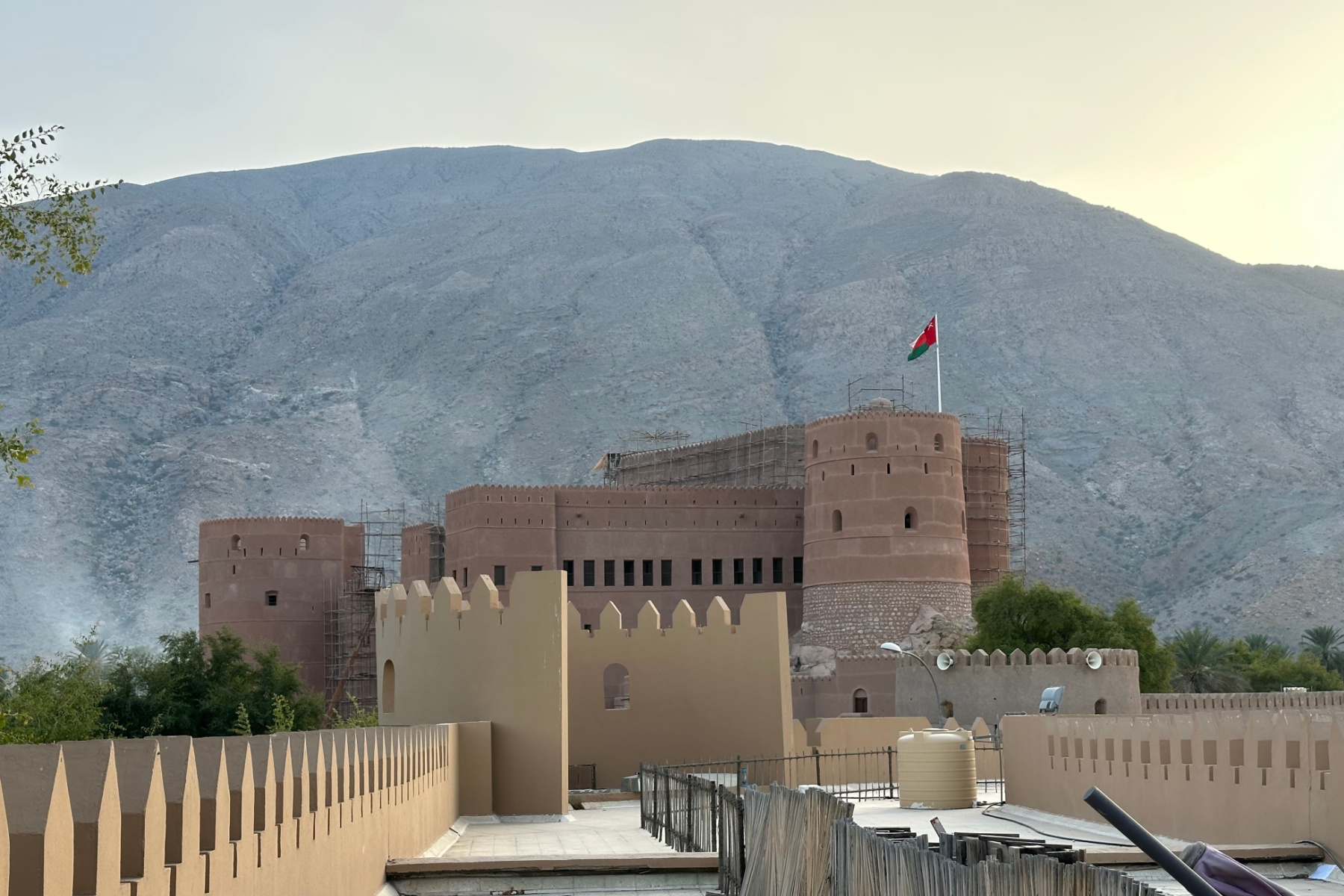
This huge fortification has been under renovation since the 1990s, so falls off the radar for most tourists as it’s not possible to go inside. However, you can admire it from outside and from the rooftop Suq Cafe nearby.
Why bother? This is Oman’s second largest fort, only pipped at the post by Bahla (a must-visit if you can). It was built on the ruins of a Sassanid fort dating from the Persians’ first occupation of Northern Oman and rebuilt in the 17th Century when Rustaq was the capital.
Imam Nasir bin Murshiad al-Yarubi used it as his seat of power while banishing the Portuguese from the northern coastline. The fort played an important role again in the 18th Century when it was used as a government hub by the al-Busaid Dynasty.
Much will be made of its reopening, but don’t hold your breath for that happening any time soon! In the mean time, enjoy a coffee break at the cafe.
Qasra Museum – a 400-year-old heritage house
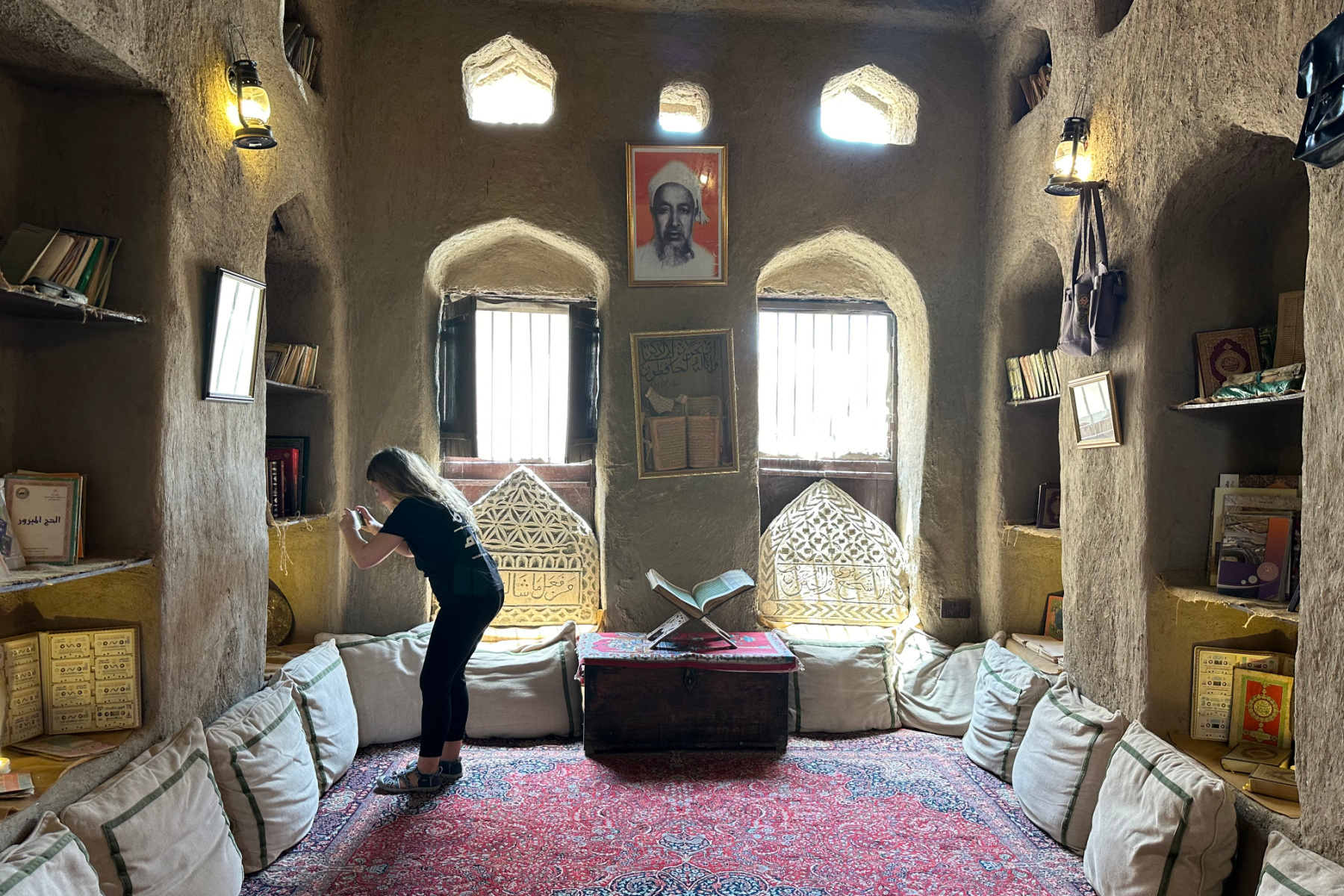
Qasra Museum in Rustaq is a heritage home that you can visit for a taste of what it was like to live in Oman in the second half of the 20th Century. It’s a short walk from Rustaq Fort.
A local judge was the last person to live there. One of his granddaughters decided to reopen the house. Her family now offers tours through some of the 24 preserved rooms, complete with traditional furnishings and modern conveniences that arrived in Oman under the rule of Sultan Qaboos bin Said (1970 to 2020).
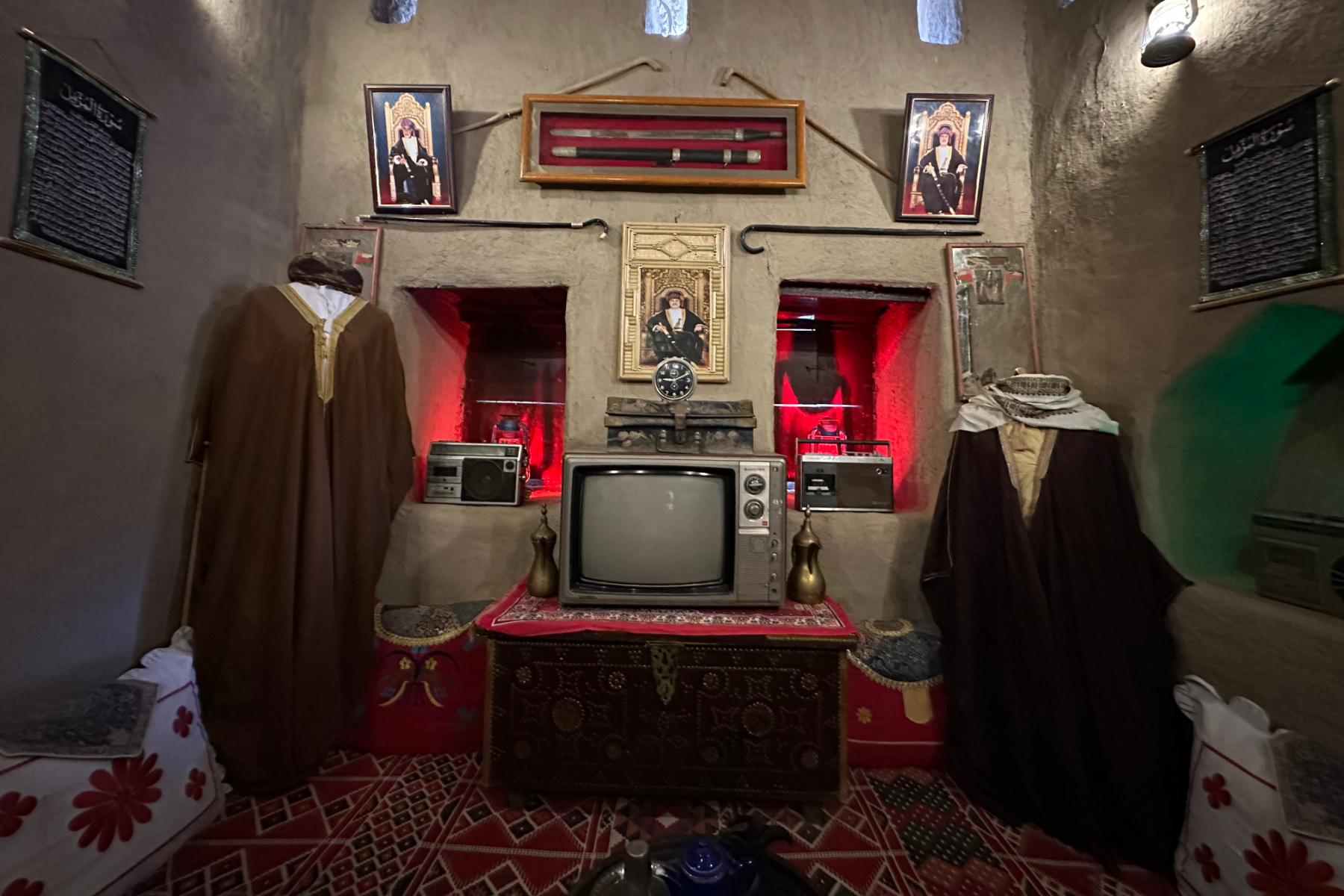
The juxtaposition of cassette players and old box TVs with thick, mud walls, wooden beams and traditional heirlooms is fascinating.
If you are interested in Oman’s history and culture, this is one of the places I would highly recommend seeing. There’s always a friendly welcome with coffee and dates.
Qasra Museum is free to visit. Here’s where to find it on Google Maps.
Wadi Hoqain sulphur pools

Wadi Hoqain may not be among Oman’s most famous wadis, but it stands out for its stunning blue pools fed by a hot spring and palm-lined waterfalls. It is located to the North West of Rustaq and is fed by hot springs and rain water running from the mountains to the sea.
In order to see the sulphur pools you must enter the canyon, which involves swimming and a bit of rock scrambling. It is a lot easier than Oman’s famous Wadi Shab or its neighbour Wadi Tiwi. I’d compare it to Wadi Bani Khalid in terms of difficulty and easy access to the pools, but it’s so much closer to Muscat.
What sets Hoqain apart is the amazing colour of the water in the narrow canyon fed by a bubbling sulphur spring. The valley also has plenty of shade making it easy to visit even outside the peak tourist season.
Read more about swimming through Wadi Hoqain, including the location of the closest car park.
Wadi Hoqain waterfalls

This manmade dam on the route of the wadi is an attractive spot with plenty of shade, making it popular with local families for picnics and swimming. You’ll find water flowing here apart from in the height of summer or in periods of extended dry weather.
There’s also small, foot-nibbling fish in the pools below the waterfall.
Find out more about visiting including the location of the car park in my full post about visiting Wadi Hoqain.
Al Kasfar hot spring in Rustaq
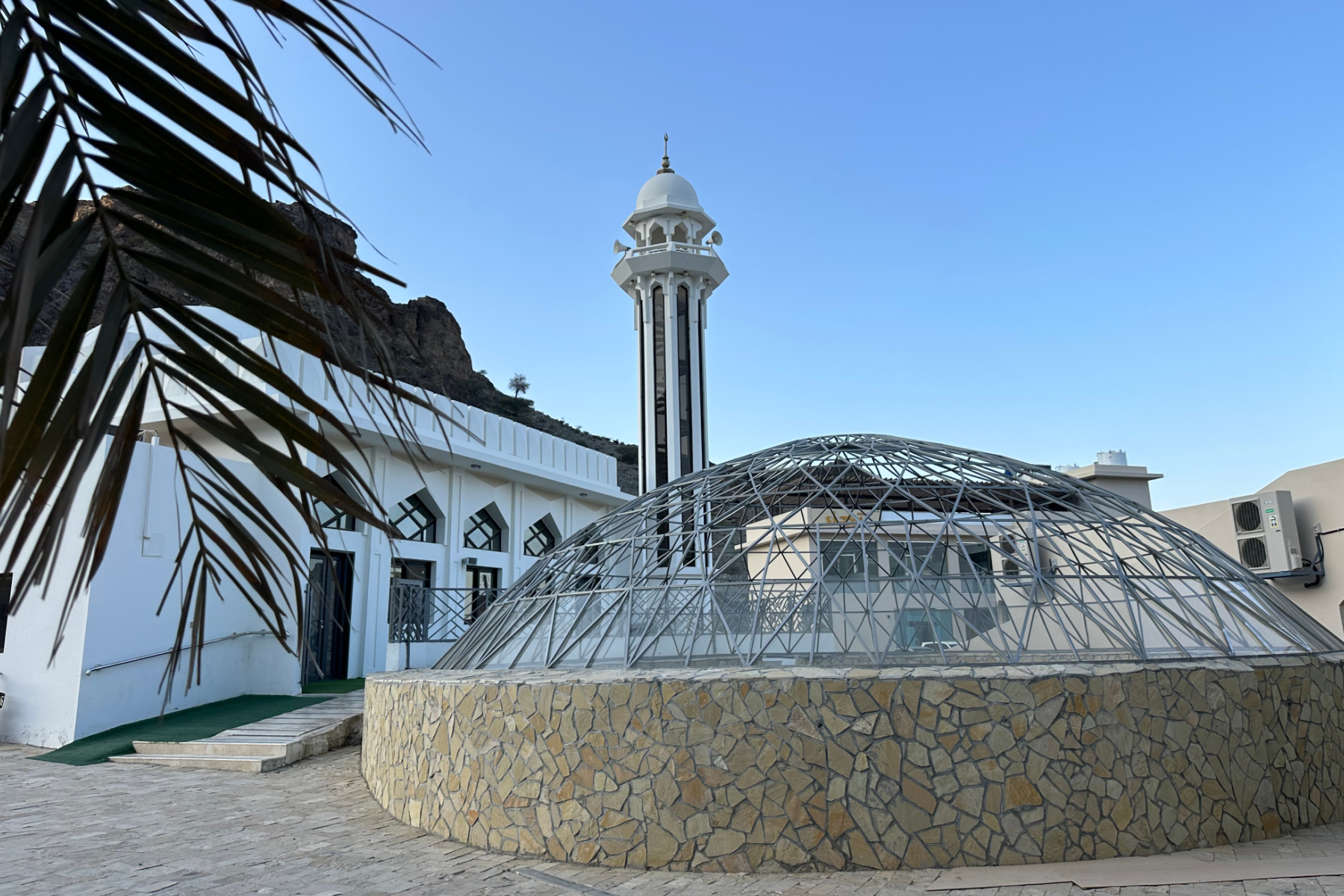
You can see and dip a toe in the thermal waters at Al Kasfar, not far from the historic centre of Rustaq. Here, the spring bubbles up from the ground next to a mosque. There is a large pool and channels of piping hot water.
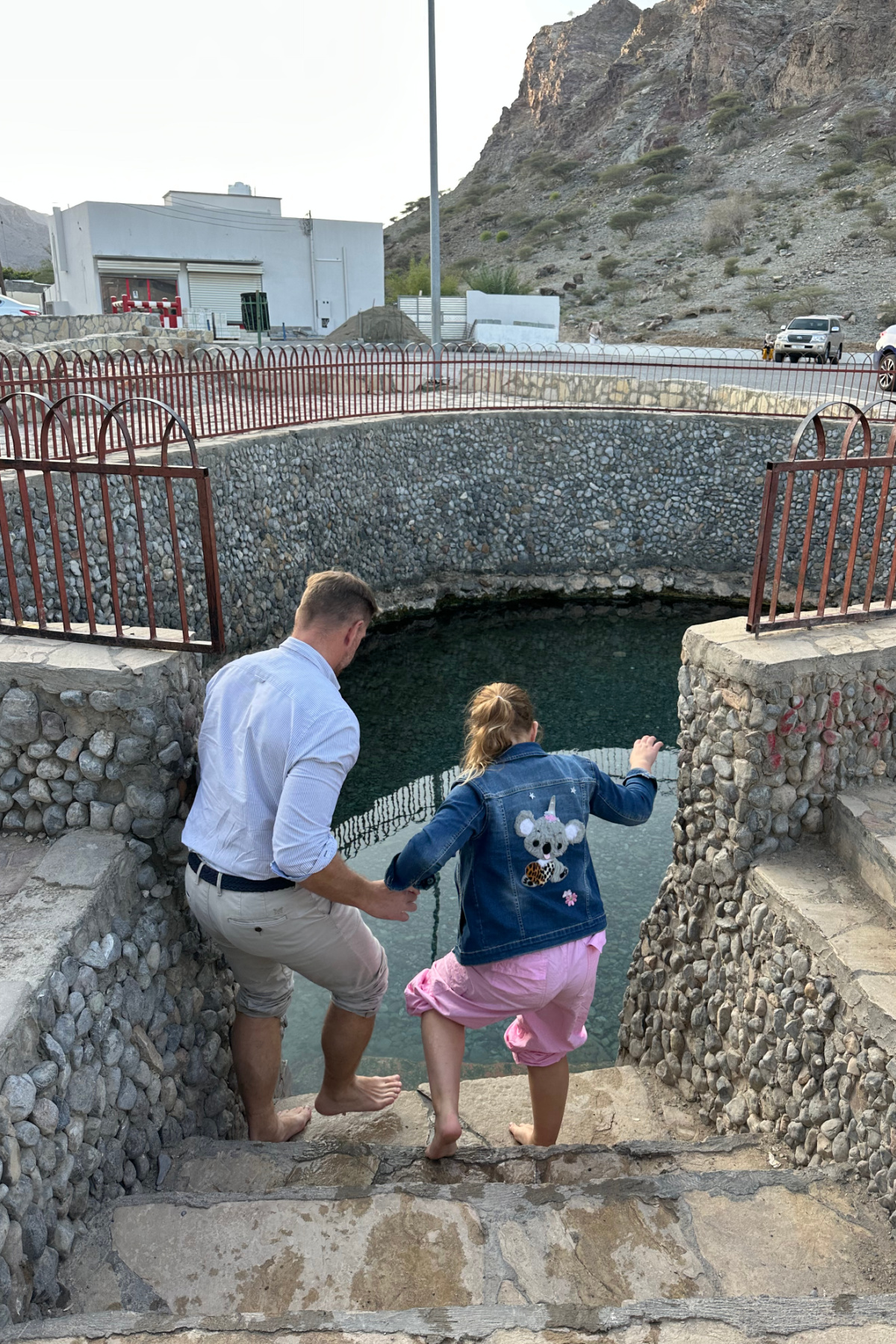
I can recommend caution when testing the water – it is scorchingly hot.
You don’t need long here. There’s not a lot to see. Maybe use it as a stop for refreshments as there are a few cafes around the spring.
Here’s where to find the spring on Google Maps.
More things to do in Rustaq
Here are some of the places we haven’t explored yet, but would be worth adding if you have more time in the area:
Hazm Fort
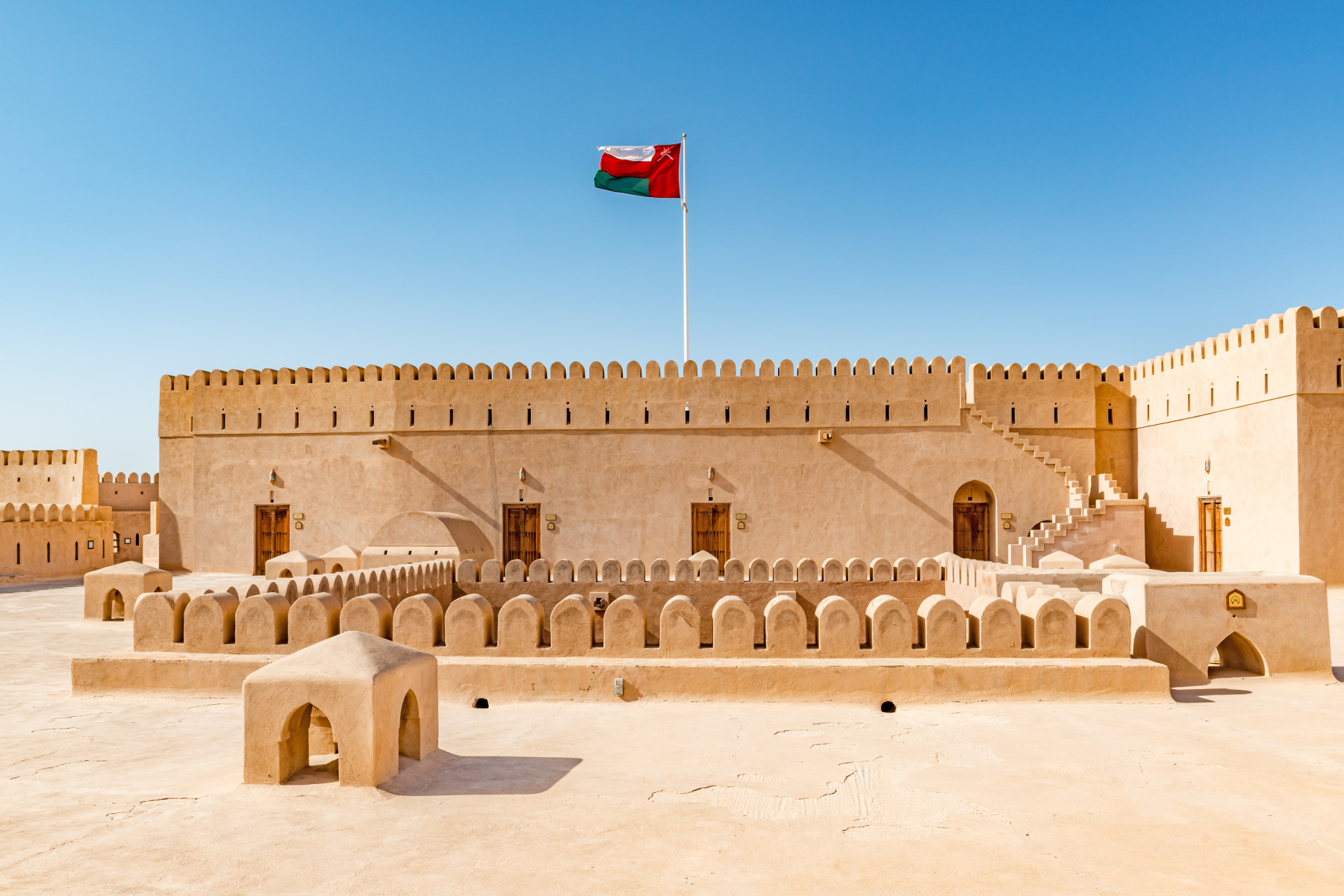
This 18th Century Fort was commissioned by the Sultan bin Saif II – part of the Yarubi dynasty – as a royal stronghold. It was the final fort this family built in Oman. They were also responsible for Nizwa Fort and Jabreen Castle, so if you have visited those you will recognise the style and layout.
Interesting fact: Sultan bin Saif II died before the fort’s completion and is buried within its walls.
Hazm Fort can be visited on the way to Wadi Hoqain or Rustaq itself just off Route 11. Here’s where to find it on Google Maps.

Wanderlust Chats
Want personalised advice for your Oman adventure? Book a 45 minute one-to-one Zoom call during which you can ask me anything about planning your trip.
How to get to Rustaq
From Muscat, it’s very easy to reach Rustaq by taking the Muscat Expressway north which flows seamlessly into the Al Batinah Expressway.
If heading to Rustaq Fort take the junction signposted ‘Rustaq’ to join Route 11 headed west. For Wadi Hoqain and the waterfalls the best way is to take the next junction signposted ‘al Huwqain’.
Here’s where to find the places I’ve mentioned in this post:
Where to stay: hotels and resorts near Rustaq
We haven’t stayed in Rustaq oursleves, as it was just over an hour from home in Muscat. But here are some suggestions if you want to stay longer in the area:
Al Rustaq Hotel Apartments: a self-catering base
These serviced apartments are about 10 minutes’ drive from Rustaq Fort, the souq and Qasra. They’re not luxurious but they are a practical place to stop over on a road trip.
You can choose from studio to two bedroom apartments, so this would be a good budget option for families and groups travelling together.
Find out more and book Al Rustaq Hotel Apartments.
Jawharat Al Rustaq Resort: small hotel
If you would prefer a small hotel with restaurant, indoor pool and gym, Jawharat Al Rustaq Resort near Rustaq has rooms to accommodate up to four people. Interestingly, you can also go budget and book a tent in the gardens.
Find out more and book Jawharat Al Rustaq Resort.
Alhazm Hotel Alrustaq: your budget option
This is cheapest accommodation option in the area, but highly rated as somewhere clean to rest your head for the night. It’s close to Hazm Fort, not far off the Al Batinah Expressway between Muscat and Sohar.
Find out more and book AlHazm Hotel.
Barceló Mussanah Resort: an all inclusive family beach resort
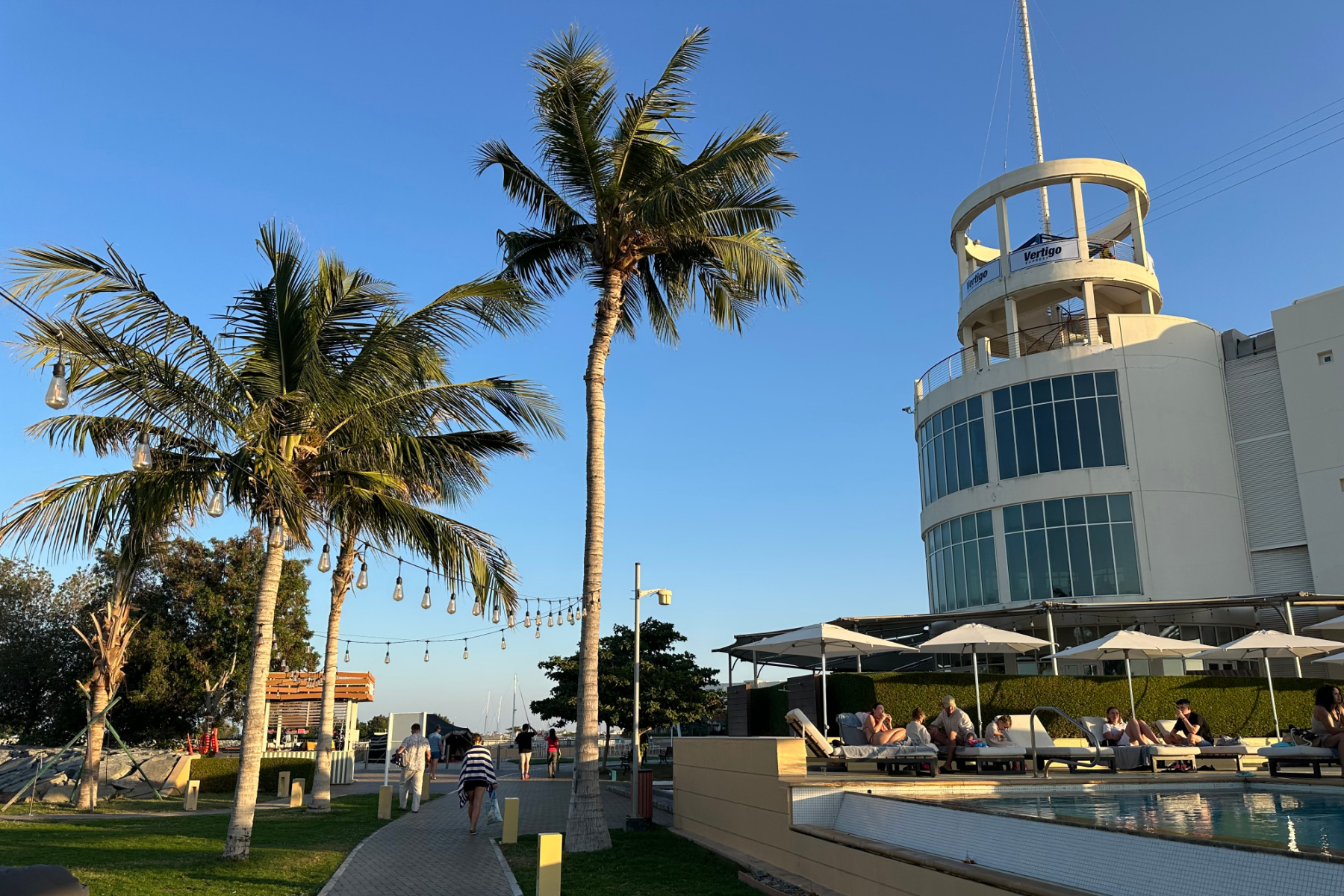
If you are visiting Oman with kids then they will love you for booking this family beach resort, which is 40 minutes drive from Rustaq. It has pools, water slides, a zip line and water sports. That’s not to mention all-inclusive food and drinks packages, which are pretty rare in Oman.
The Barceló is particularly popular with European visitors and feels more like somewhere on Egypt’s Hurghada coast than Oman.
Find out more and book the Barceló. Etihad Holidays also offer package holidays to Barceló Mussanah Resort including flights and transfers.

Ready to go?
Plan your perfect Oman adventure with our UK-based, ATOL-protected travel partner who will help you craft an unforgettable holiday, tour or day trip
Where next?

Messages from my readers
“Thank you for your immeasurable assistance in our planning for visiting Oman. Your website is a treasure trove. Great ideas for places to visit and spend time exploring.”
Stephen from Australia
“The website is great! I’m practically studying on it! Loads of info, easy to read and follow, thank you so much for sharing. As an expat I know how much work there is behind it.”
Oman Unpacked Facebook Group member
“Thanks for your website. We discovered the Suwgra thanks to you. We actually hiked the whole dirt road down to the village – 1h 10 of stunning scenery – and this made us decide to come back next year and stay there overnight.”
Talitha from France
“I wanted to let you know that our 12-day round trip in Oman was made even better by some of the blog tips we followed. The Suwgra in Jebel Akhdar was amazing and so glad we got to experience it even if it was just for coffee! Thanks again for sharing! Keep travelling, writing and inspiring!”
Helen from the UK
“I just wanted to thank you for all your fabulous tips and tales around Oman! We have been here many times, but I finally got to the pools at the end of the Balcony Walk thanks to your description! I always look at your blog for advice when coming to Oman.”
Jackie from France


