
Driving the Bedouin road across Wahiba Sands in Oman

Off road adventures are a big weekend pastime in Oman and one we were excited to embrace. There’s so many landscapes to be explored from mountain passes, to dry river beds and, of course, vast deserts. One such 4×4 adventure high on our bucket list was to drive the Bedouin road across Wahiba Sands desert.
In this post I’m going to share our epic 174 km desert crossing from Ghalat on the Arabian coast to Bidiyah on the northern edge of Wahiba Sands. Importantly, I’m also going to talk about safety, equipment and why this is not a trip to do alone.
But before the good stuff, I’d like to thank you for visiting Oman Wanderlust and also encourage you to join our Facebook group Oman Unpacked. It’s a community to get even more personal recommendations from visitors and expats who love Oman.
*This post contains affiliate links. If you click and buy something, I may earn some commission. This is at no extra cost to you but helps me cover the costs of running this website. See my privacy policy and disclosure policy for more information (links in footer).*
Desert driving experience
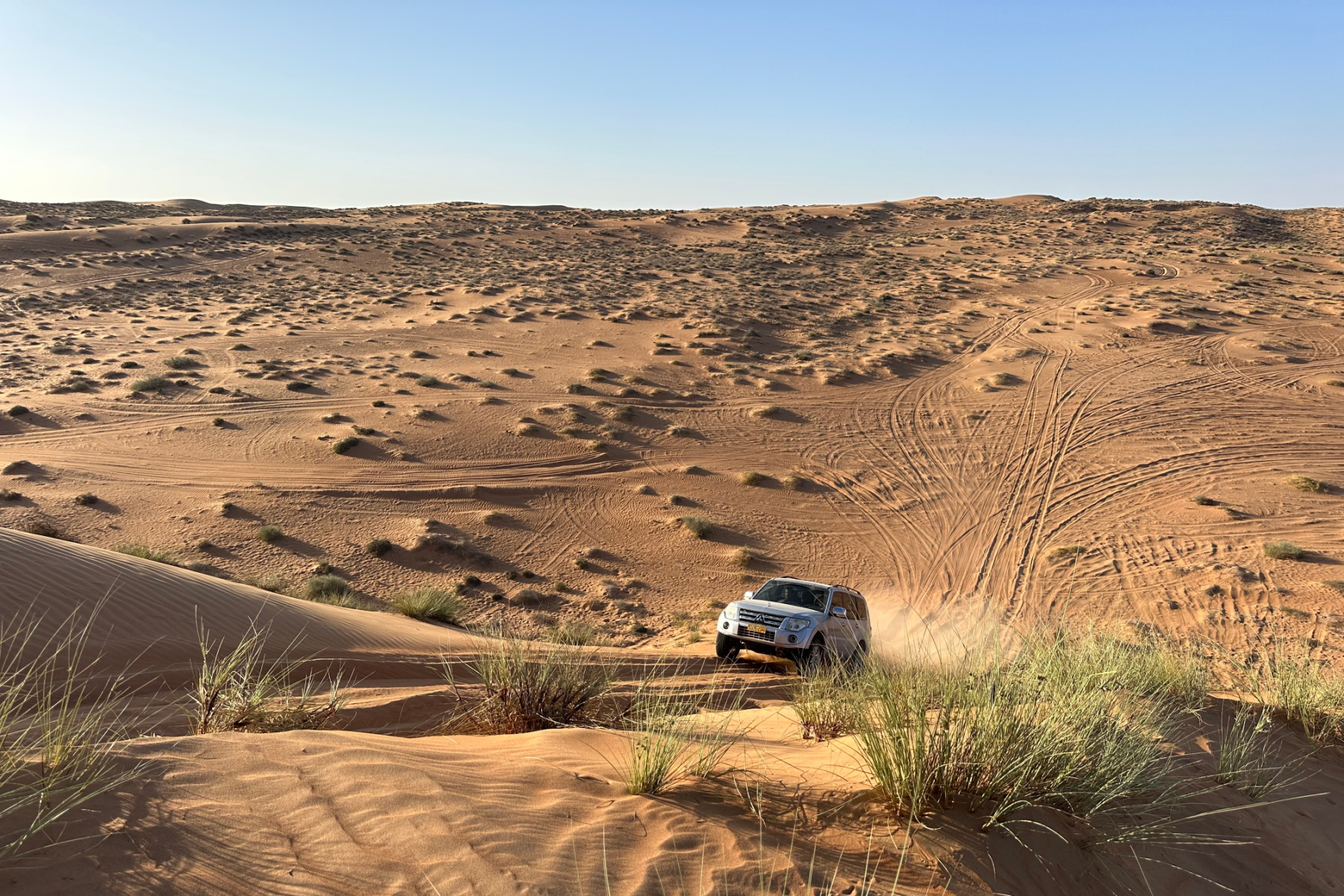
Before moving to Oman, we had no experience of driving in deserts. We had a lot of learning to do about moving across the sand, recovering our vehicle when it got stuck and knowing when a route was safe.
Over a period of two and a half years, we drove extensively in Wahiba Sands desert, both with experienced friends and on group tours. Even with our acquired skills and knowledge, we would not attempt the crossing from north to south on our own.
Why? Because it would be like sky diving without an emergency parachute. If something goes wrong, you’re going to end up in a right mess.
And what could go wrong? You’d have to be silly to go bashing up sand dunes with no back up. But it’s not this kind of avoidable misadventure that you need to worry about. It’s the mundane things, like a blown tyre after you’ve already used your spare, an engine malfunction, a sensor error or running out of fuel.
Anyway, I hope you get the picture. Don’t do this solo! Go with at least one other vehicle.
Now, on to the crossing itself.
Why travel the Bedouin road?
It’s most definitely a flex to be able to say you have crossed a desert and I would argue that Wahiba Sands is the perfect one to do.
It’s achievable in a day, without snags, and you have the well-trodden Bedouin road to follow.
Along the way you will see and have a chance to meet a few Bedouin who still live remote lives in the desert. Look out for signs next to camel stations inviting you to stop for coffee.
You will also notice the desert’s many faces, from scrub covered low lands to massive dunes. You’ll see from my pictures, there’s more to Wahiba Sands than what the standard guide books share.
Off road from Ghalat to Bidiyah
This was the grand finale of our road trip from Oman’s capital to the southern city of Salalah and back. Rather than take the easy tarmac of Route 32 up the West side of Wahiba Sands we wanted to experience what it was like to drive up through the dunes.
We arranged to meet friends at the crossroads town of Mahoot (Google Maps location). They came from Muscat while we had travelled up from staying in Duqm the night before.
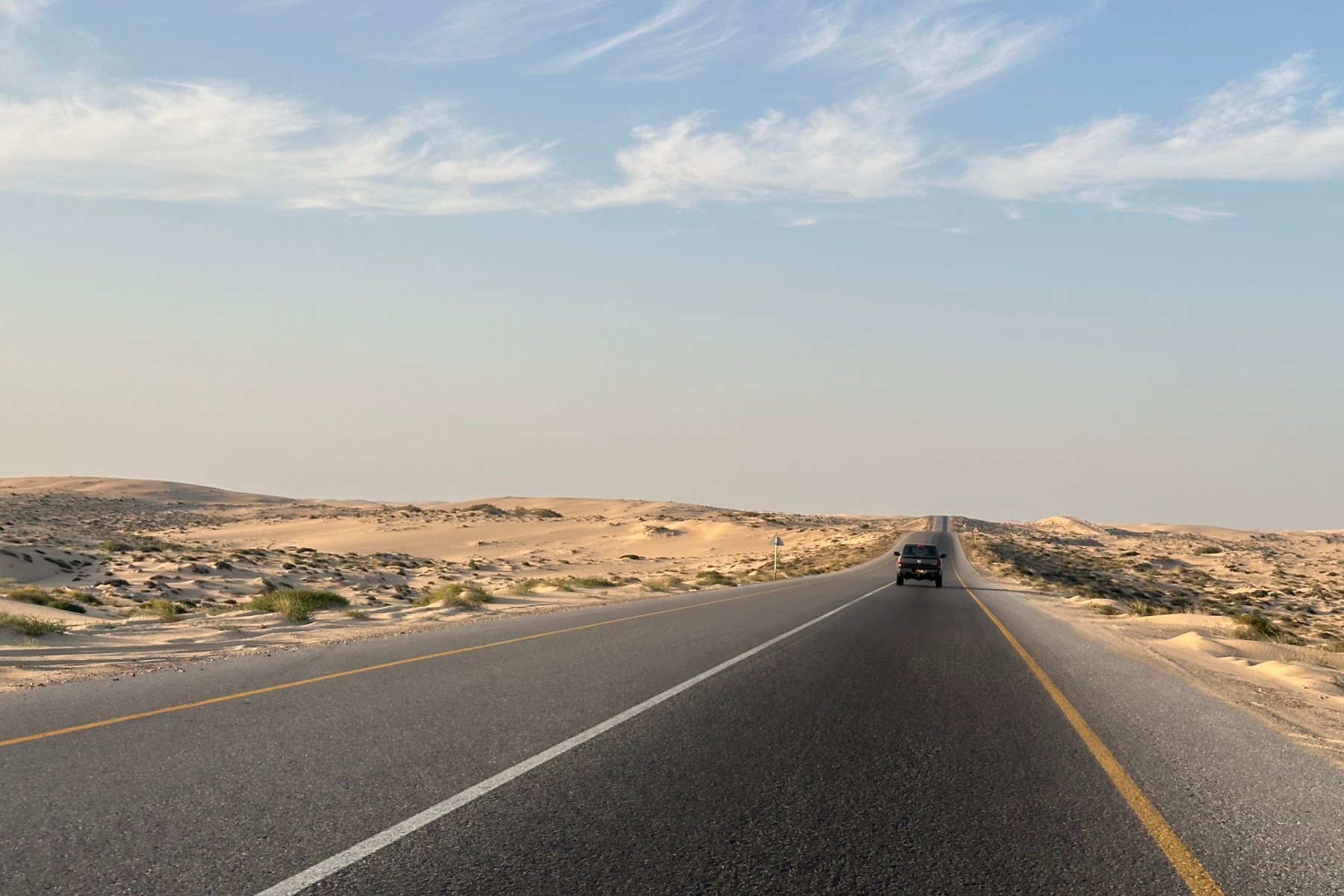
We convoyed East to the coast road where the scrubby landscape gives way to sand as you turn North. To our left were the low rolling dunes of at the southern most tip of Wahiba Sands. To our right we could see the glistening Arabian Sea complete with dhows fishing off shore.
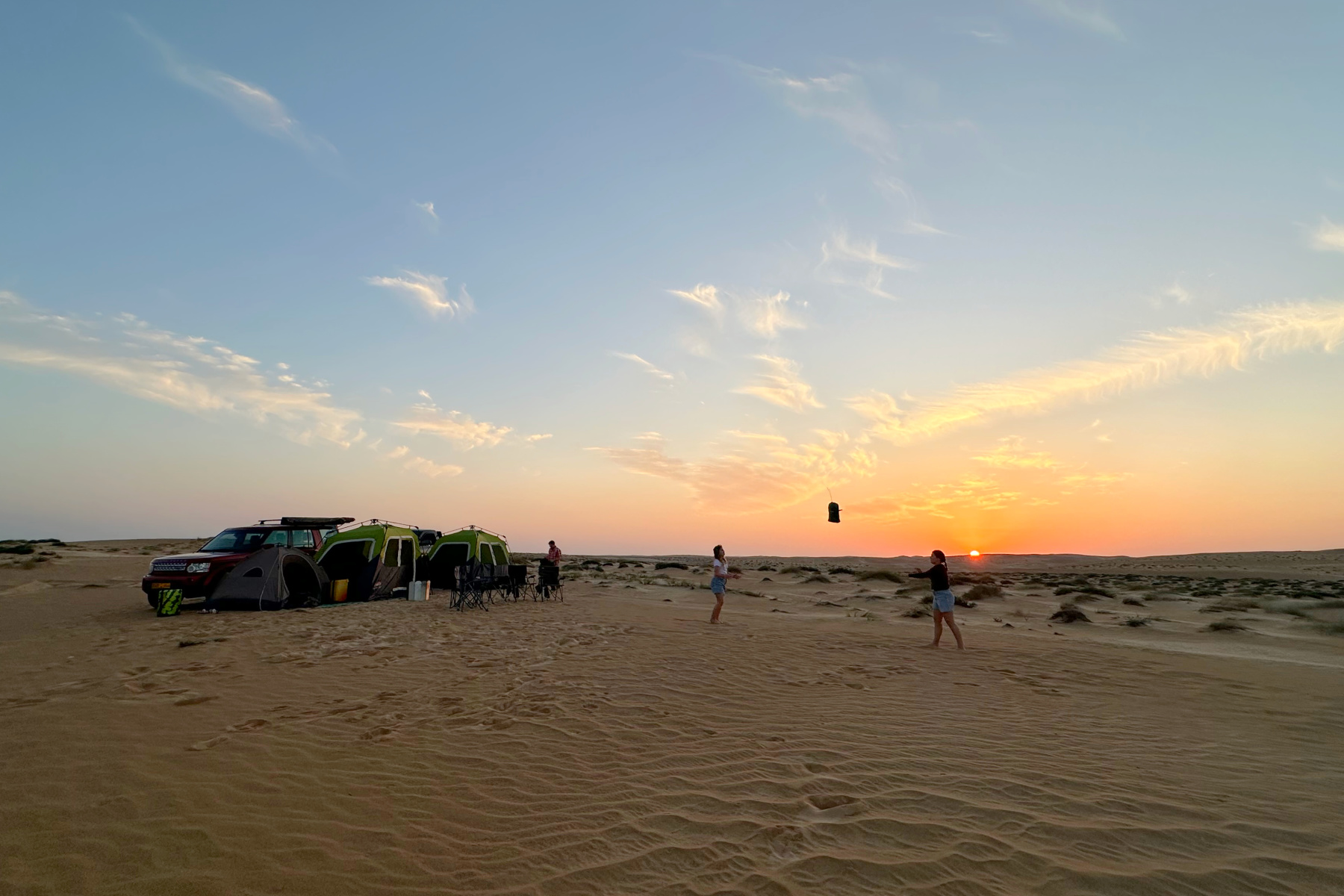
Just before sunset we pulled off the main road and camped with the sounds of the waves in the distance.
Starting the crossing
The next morning, at 8.15am, we began our desert crossing at Ghalat, which is not much more than a place name on Google Maps.
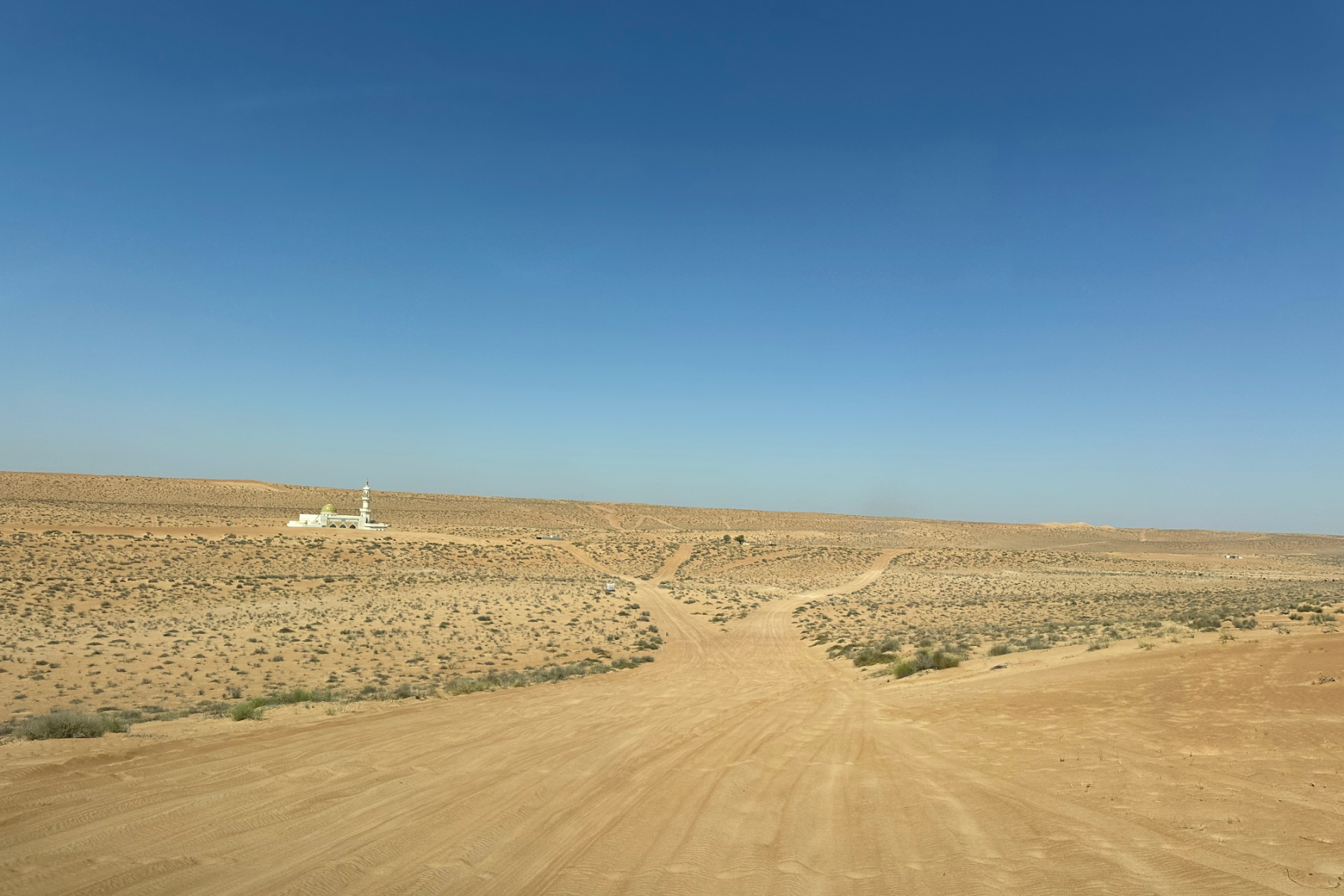
Here was our first view of the road snaking through the arid landscape.
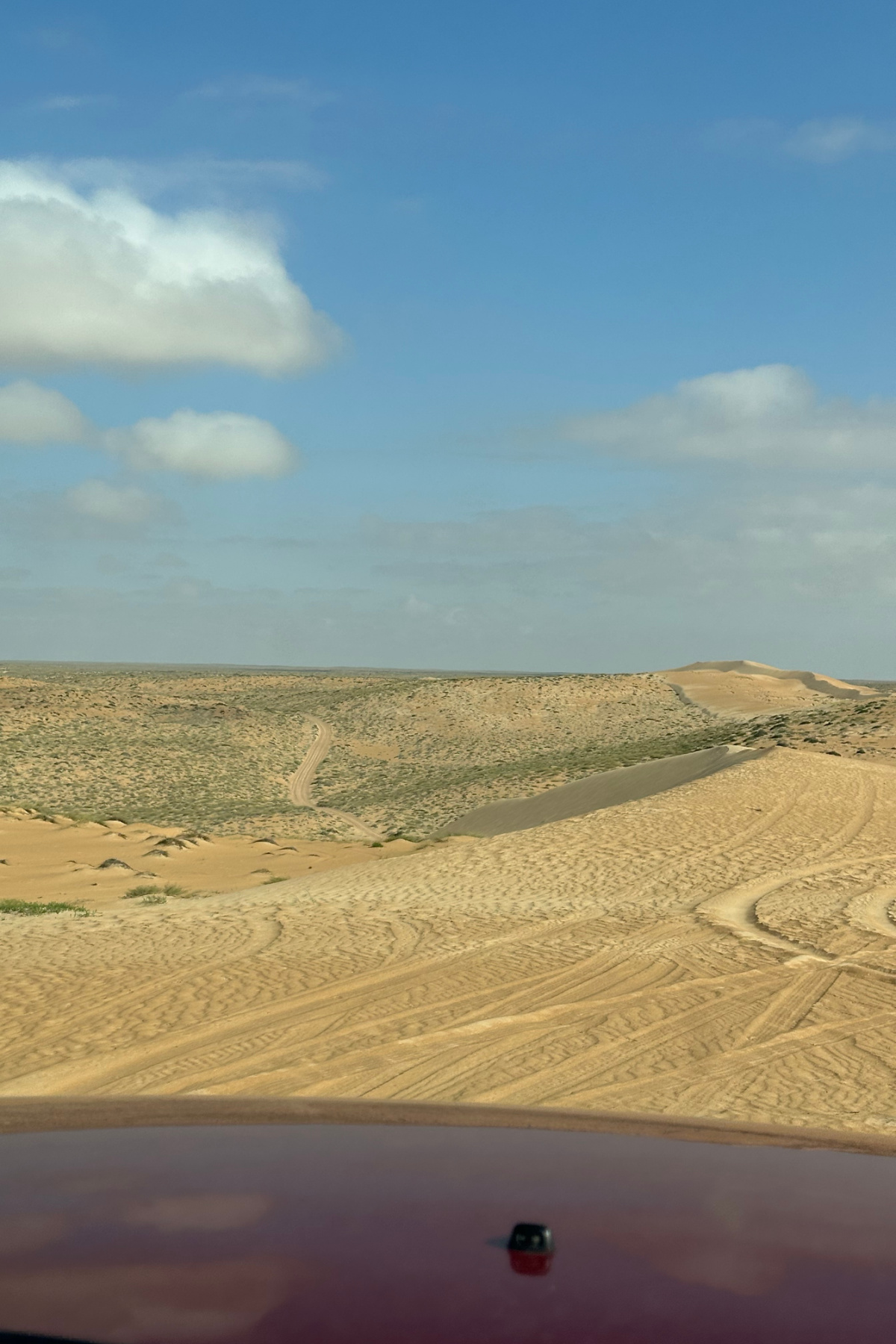
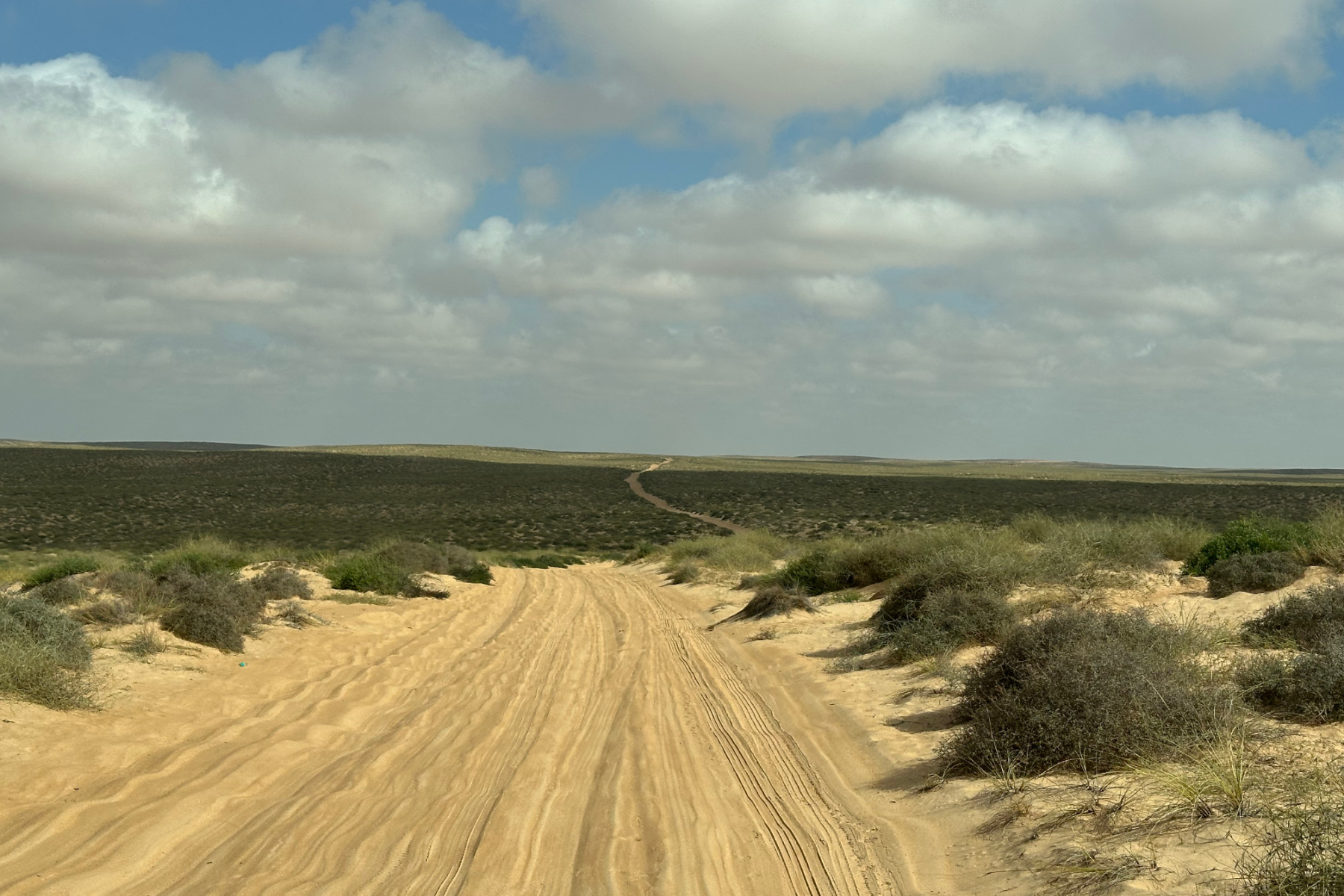
The Bedouin road is a well-used sandy track and mostly easy to follow. Along the way there are camel farms, an incredible mosque (Google Maps location) two hours from the nearest tarmac road and rolling scrubland that transforms into towering dunes.
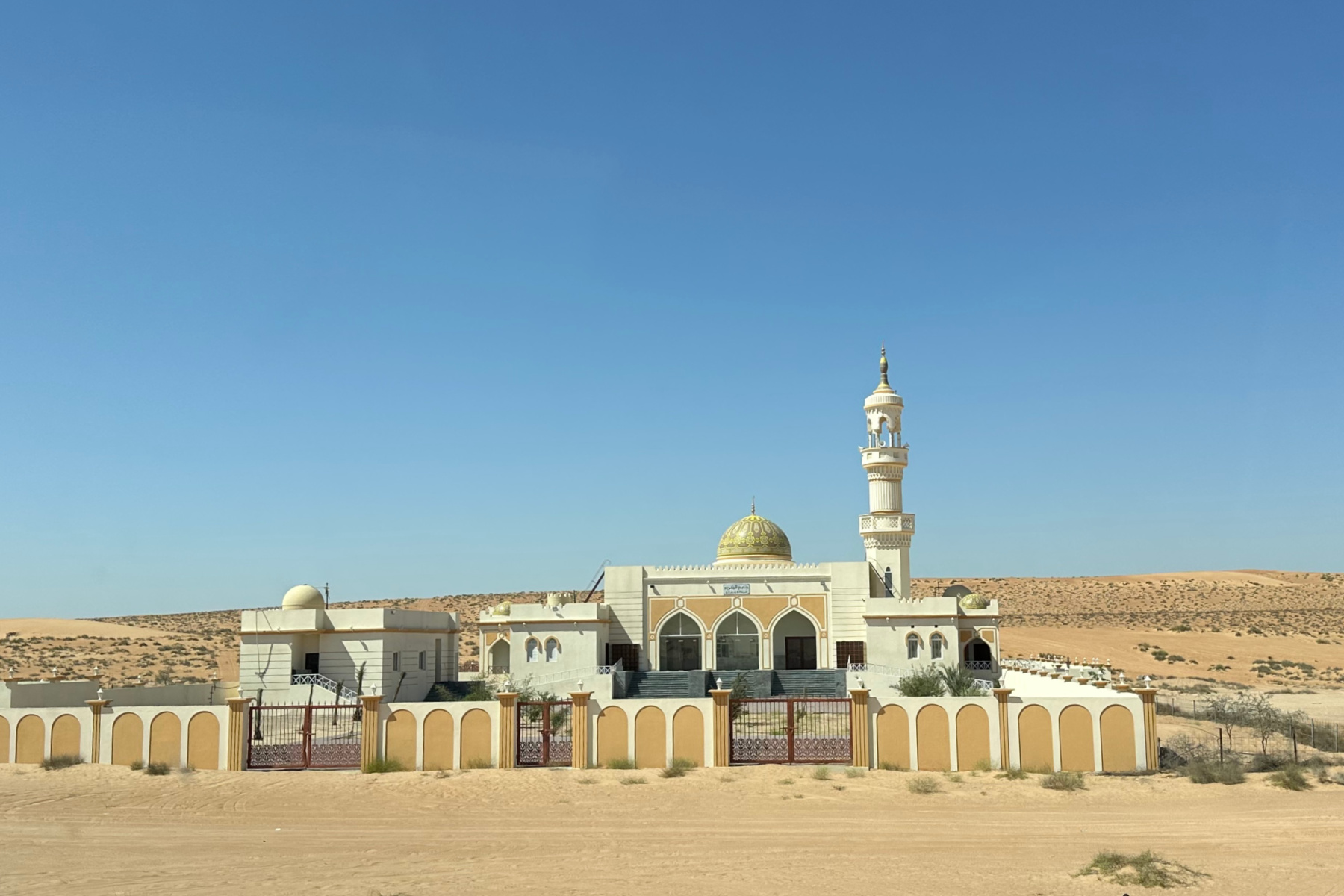
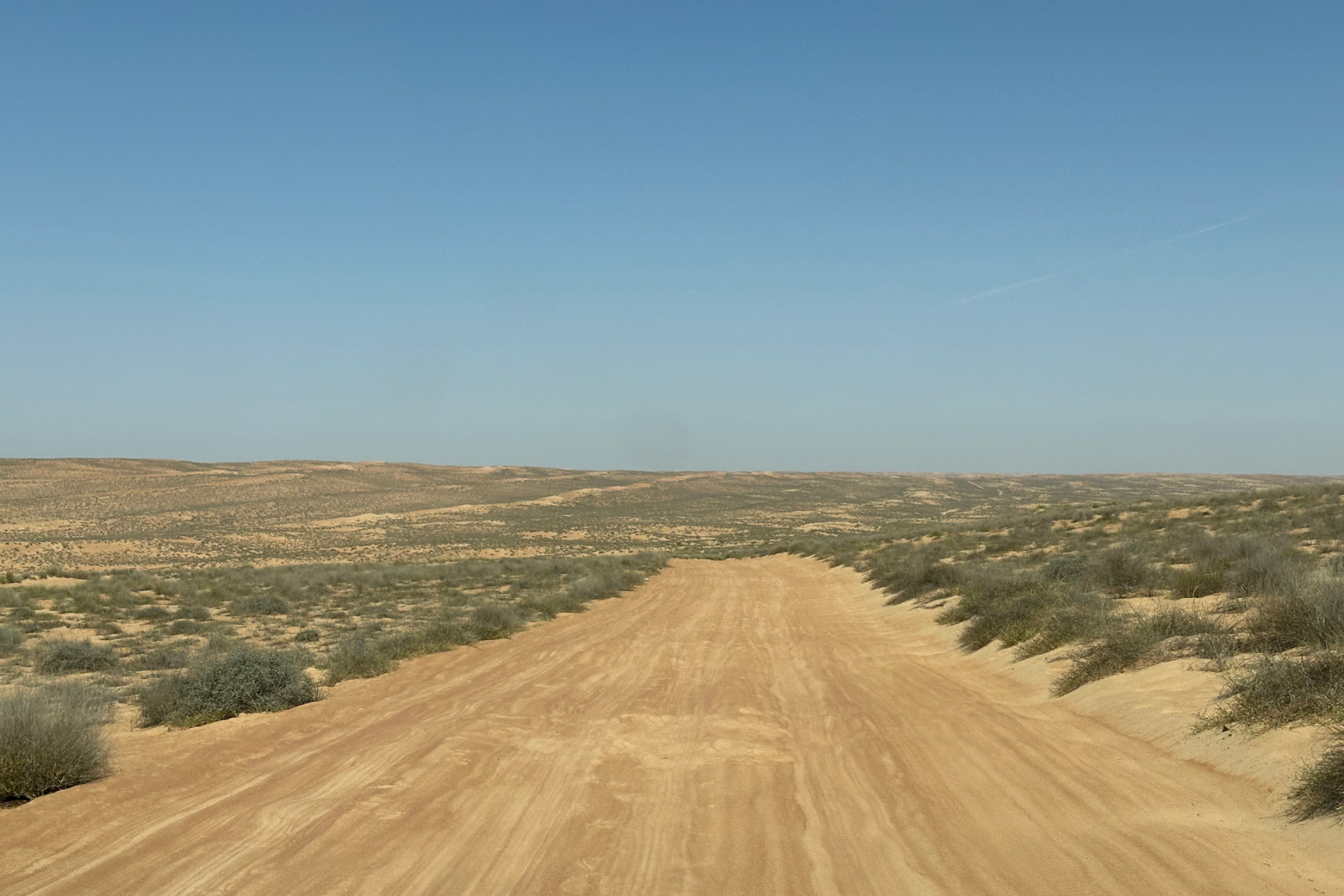
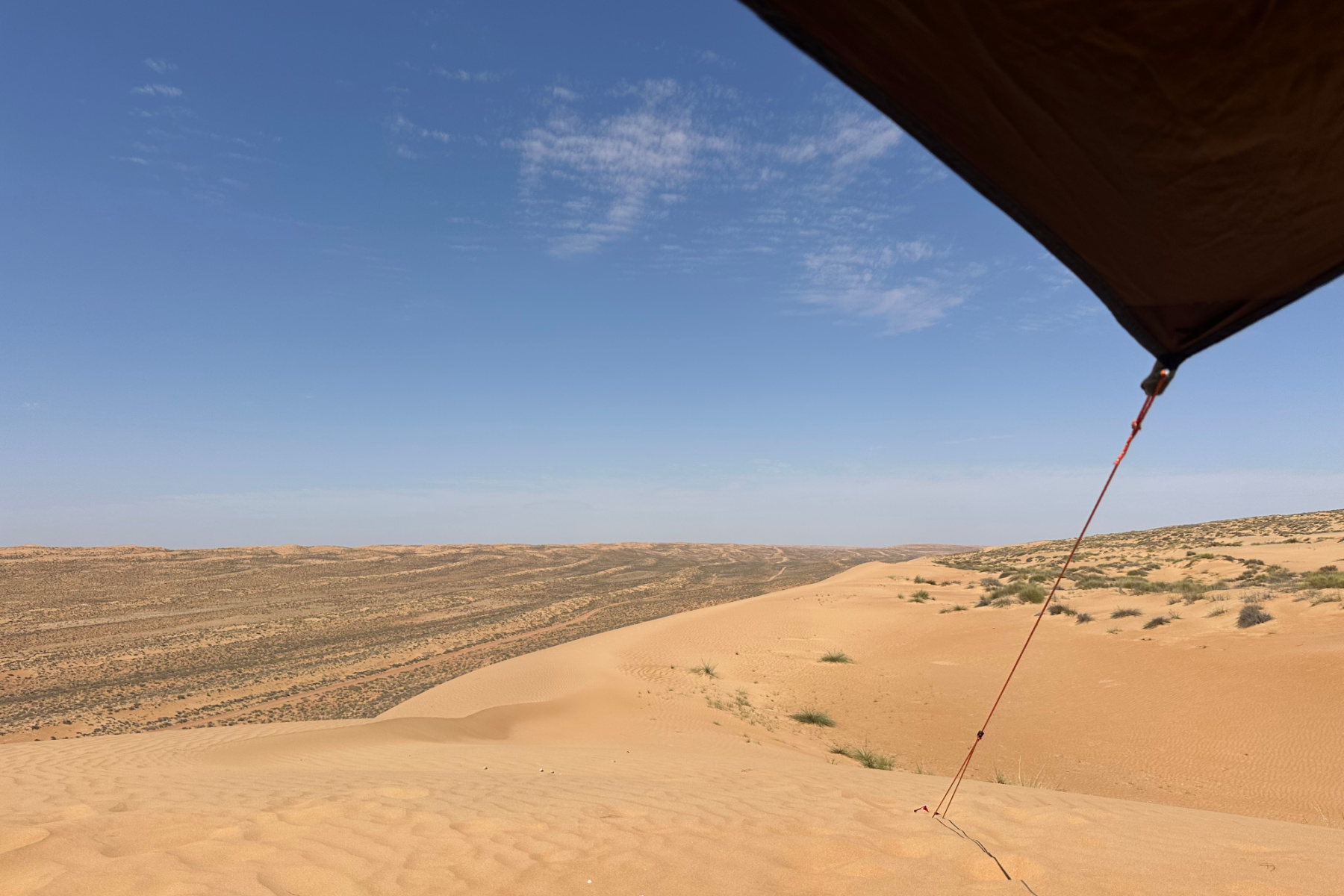
Getting stuck in
While I say the track was easy, our journey was also a good reminder of why you should never underestimate the desert.
As the day goes on the overnight dew evaporates and the sand becomes softer. What starts our as a firm surface can quickly become dusty.
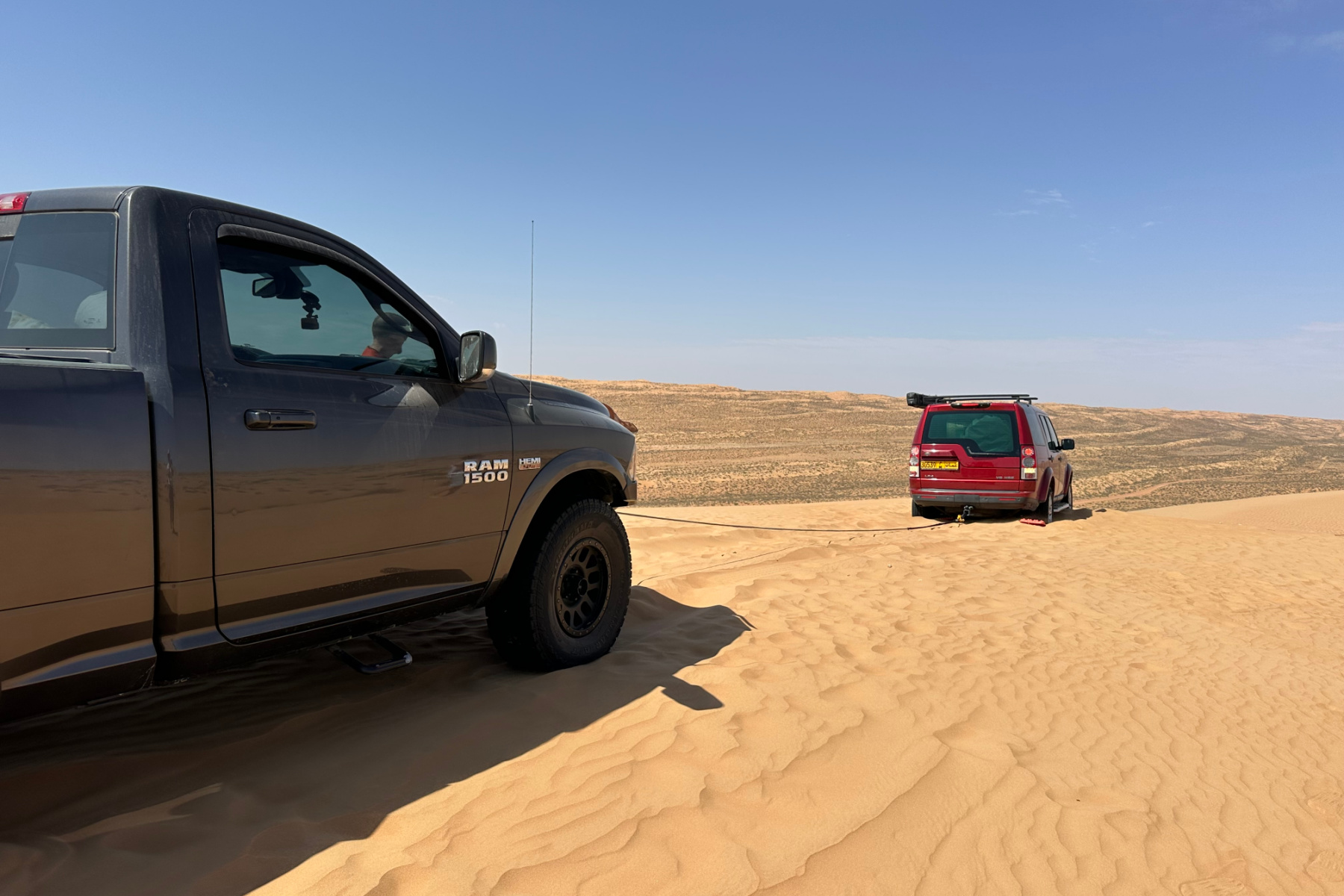
We sank in soft sand twice while seeking out a lunch spot off the track and taking an unnecessary detour while feeling smug that the end of our journey was in sight.
Having back up and the right equipment to tow us out saved the day.
Desert wildlife
Something we’d not anticipated to encounter each time we stopped were swarms of ticks. These horrible little parasites were ready to pounce when we stepped outside our cars during the first half of our journey. If there’s camel farms close by, also assume there are ticks!
The only other wildlife we spotted were small lizards scurrying across our path while larger ones darted into bushes as we drove towards them.
The return to civilisation
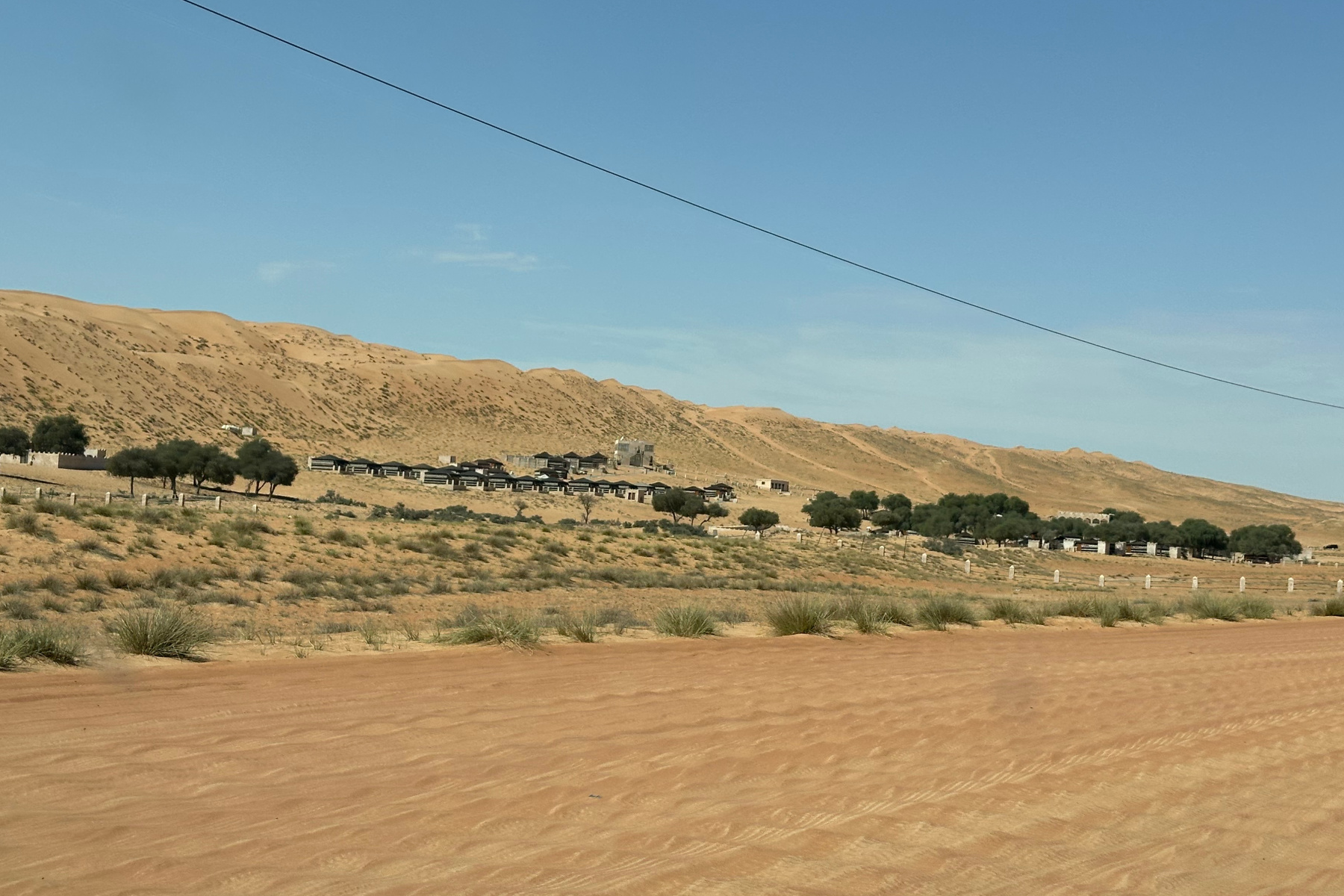
Five and a half hours into our journey we passed one of Oman’s most famous desert camps, the Thousand Nights Camp. It’s about an hour into the desert from the north, so stargazing must be brilliant here. Otherwise, it didn’t look like anything special but it did have air con and power lines running through the valley to supply it.
I’m not sad we didn’t stop for the night. We’ve been lucky to stay in other amazing desert camps.
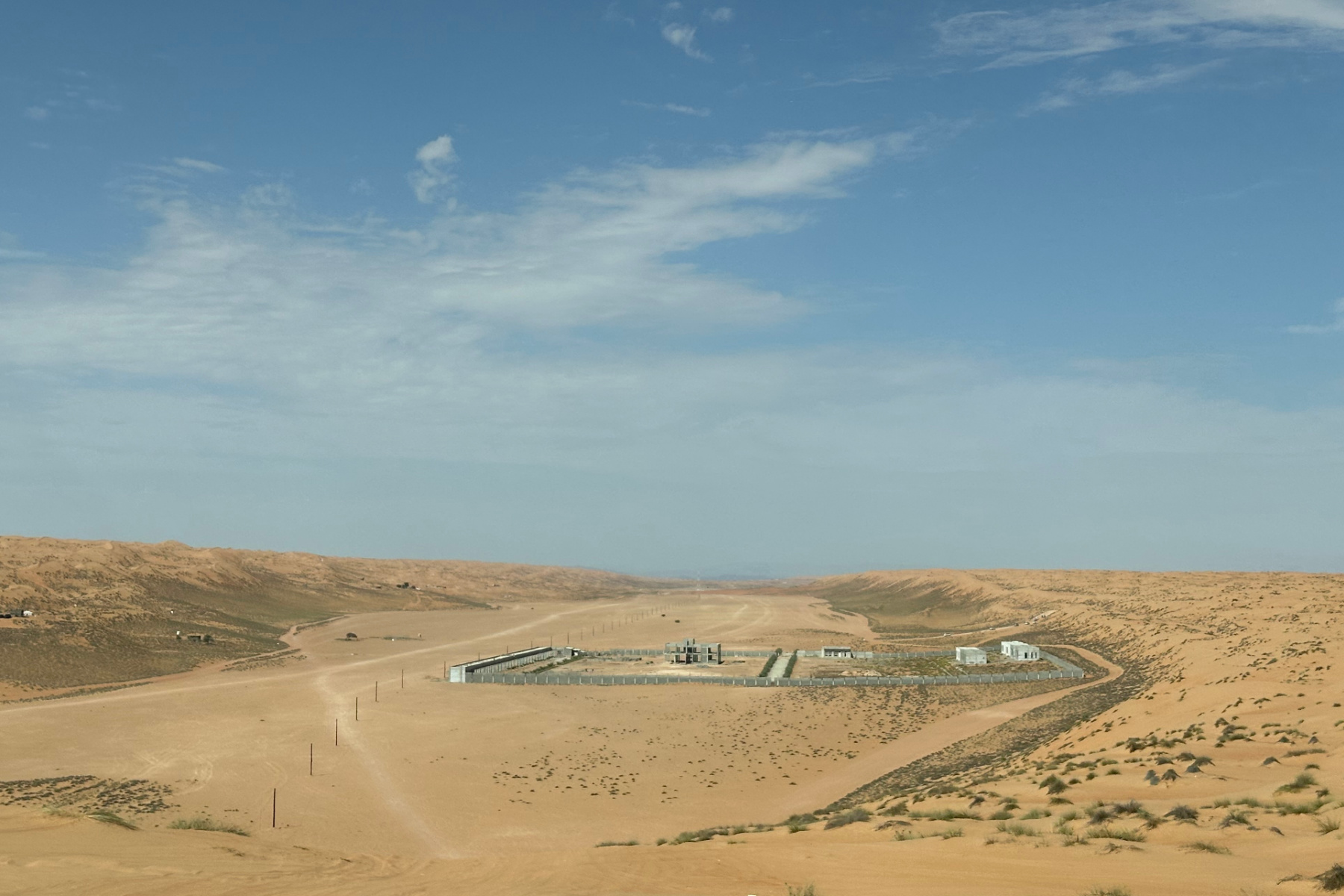
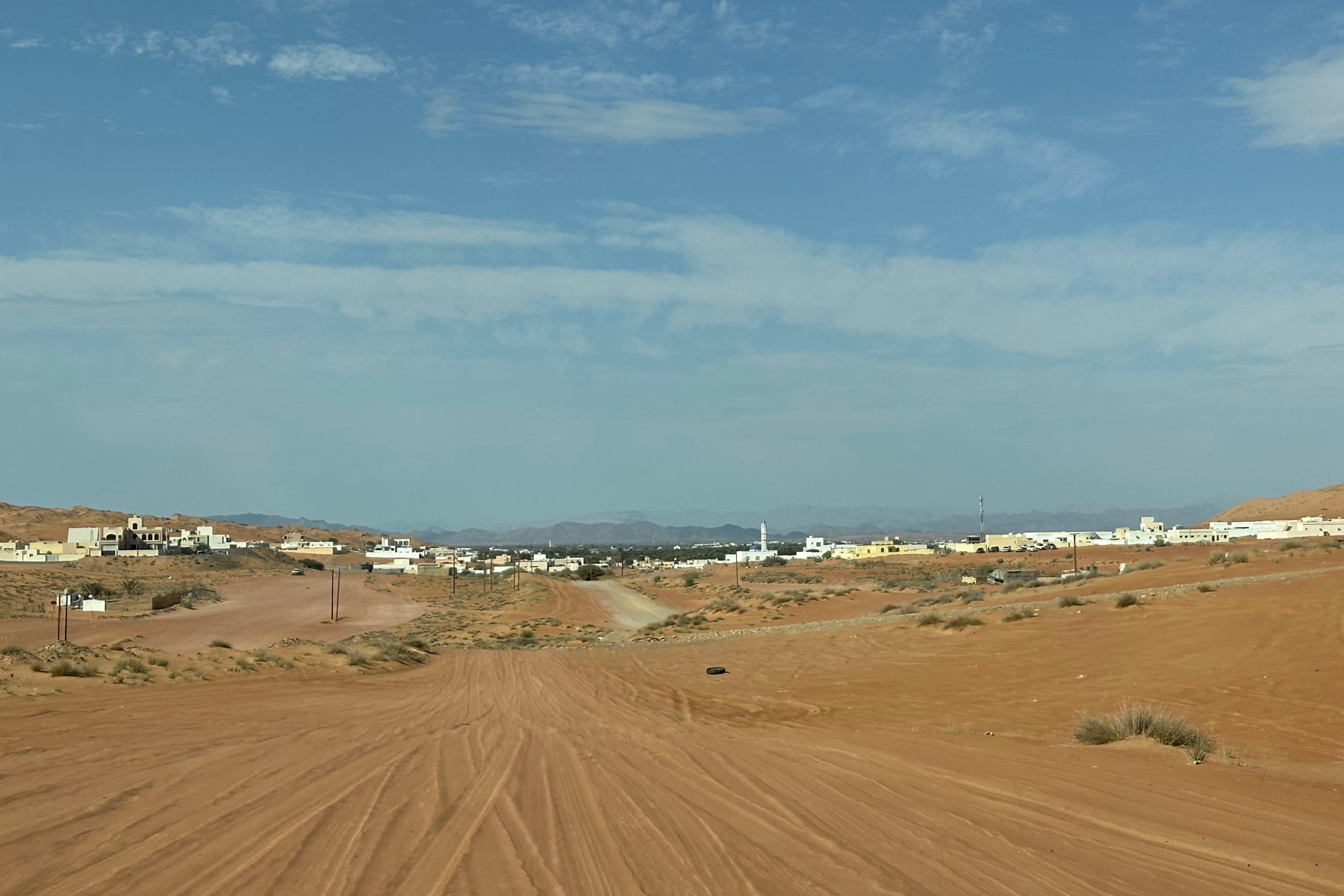
After seven hours off road we came to the small town Al Raka on the edge of Bidiyah where we aired up our tyres and continued to Al Wasil for a well-deserved cup of Karak Tea.
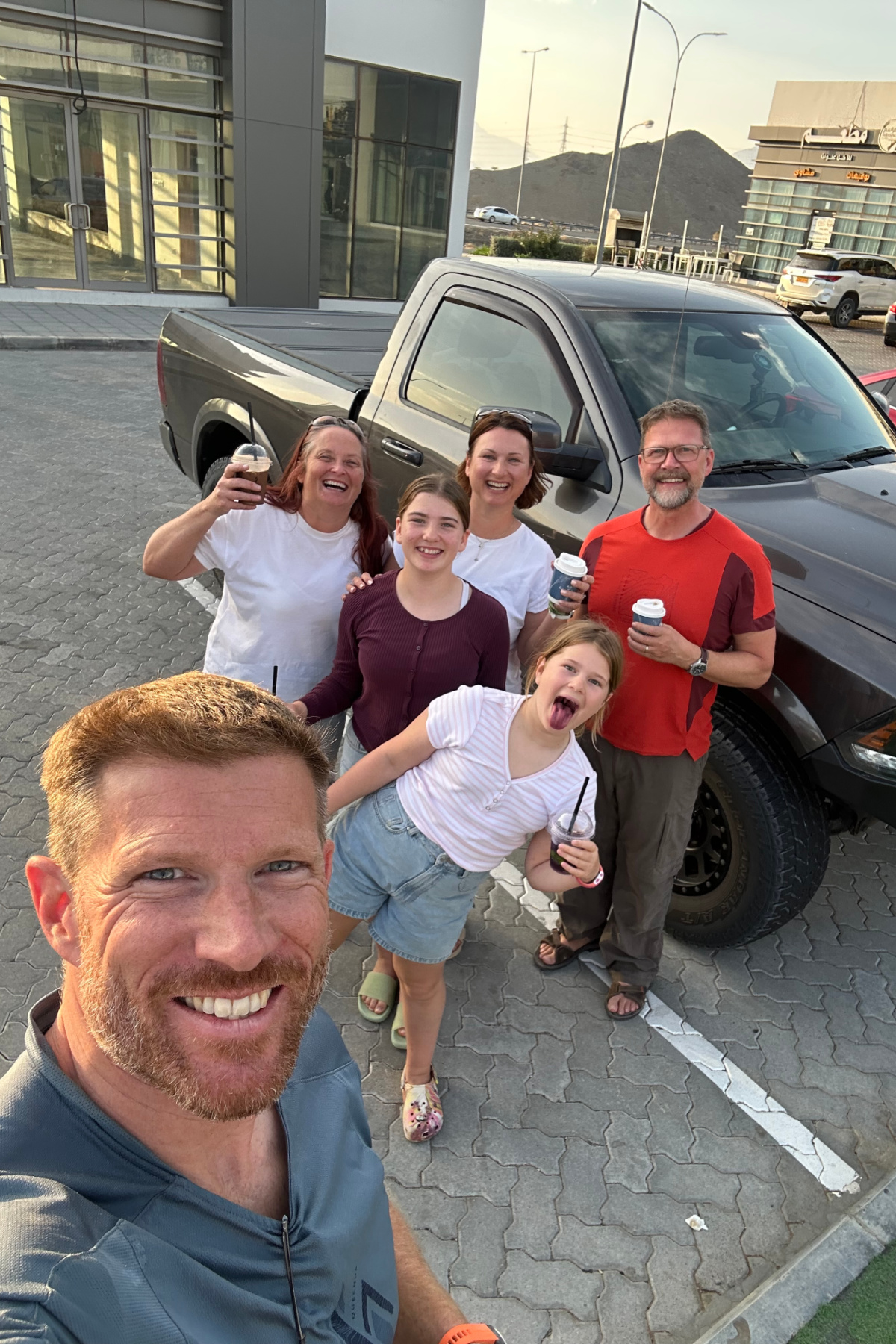
The final 197km was along the very familiar three lane Route 23 that weaves through the Hajar Mountains to the outskirts of Muscat. We were back in the city by sunset after another refreshment stop at a favourite coffee shop, Sol Cafe (Google Maps location).
Essential off road equipment for crossing a desert
A successful desert crossing isn’t just about having a pair of 4×4 vehicles and friends keen to come with you. You need the right kit.
My husband is the off road enthusiast in our family, so I asked him to put together a list of the equipment we had with us for this trip.
If it sounds like a lot, please bear in mind that it is always better to be prepared. And we have been able to get ourselves unstuck on more than one trip in the desert, so this kit is tried and tested.
Read more of our tips for driving in Oman.
But first…
You must have a plan before you enter the desert. Where are you going? When will you be back? Who will raise the alarm if you don’t make contact when expected? And do they have the right details for who to call? There’s no point in asking your mum in London to raise the alarm if she doesn’t have an Oman point of contact.
Car kit list for going off road in Oman
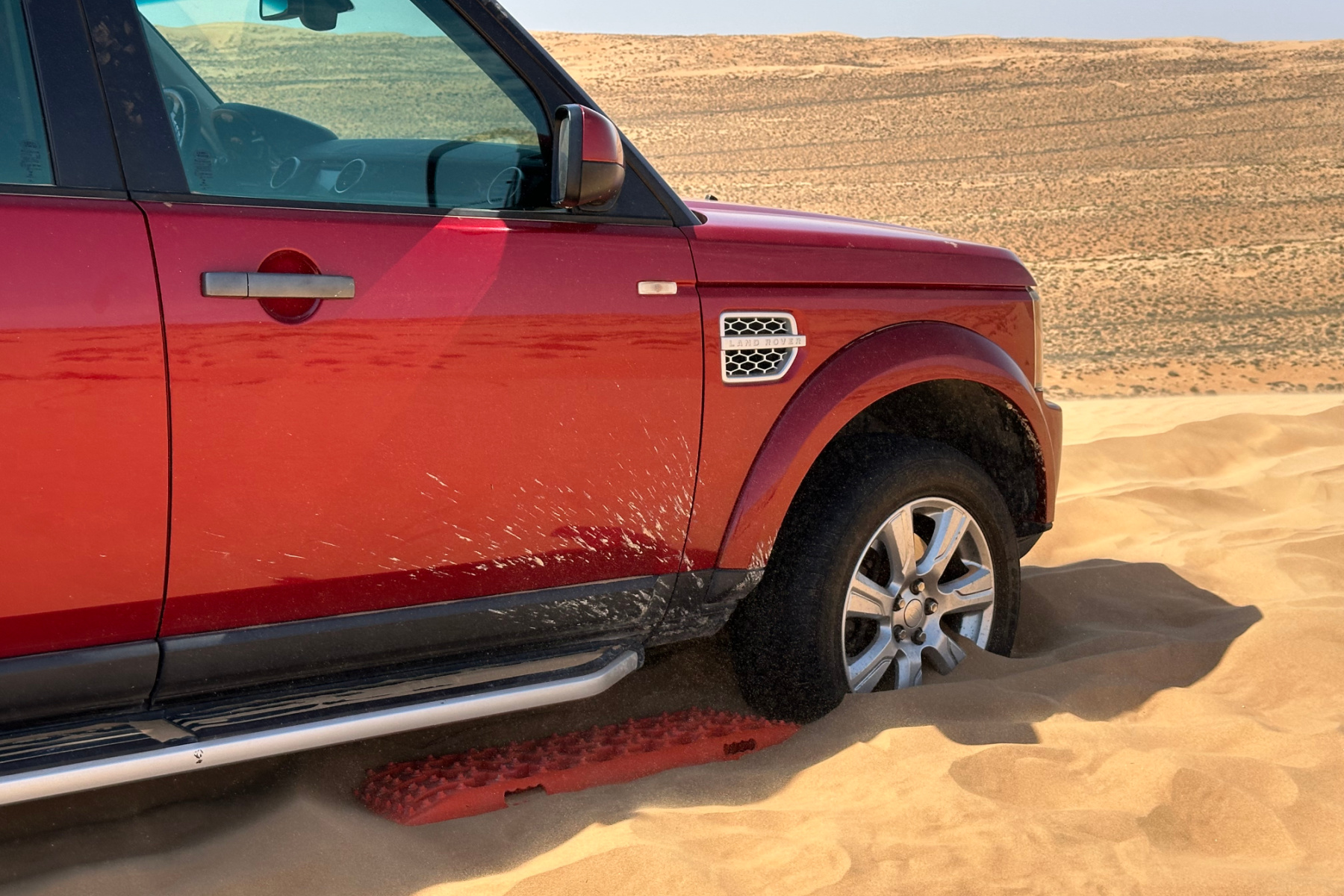
Below is a list of tools we had with us for this trip. This list is designed for expats who want to purchase the right equipment for their off road adventures and for visitors to discuss with car hire and tour companies:
- GPS navigation app – there’s no mobile signal for the majority of the drive through Wahiba Sands. So we used Gaia GPS to download the route of the desert road and make sure we stayed on track. Even if you download Google Maps it doesn’t show the whole route of the Bedouin road
- Spare battery packs and charging cables for mobile devices
- Spare tyre in good condition. Test it at low pressure and under weight
- A method of lifting the car like a bottle jack, exhaust jack, farmer’s jack or pneumatic jack
- Air pressure gauge including spare valve cores
- Puncture repair kit
- Air compressor
- Wheel brace and locking wheel nut key, if applicable
- A tow strap or kinetic recovery rope
- Soft shackles
- Sand boards
- A spade
- A head torch or torch with spare batteries
- Battery jump pack and jump cables
- A canister of spare fuel
- Two way radio and spare batteries to talk to your travel companions
- Cable ties and duct tape for running repairs
- A basic tool kit
If your travel companion also has a winch on their vehicle, that’s a great help.
Camping supplies and personal items
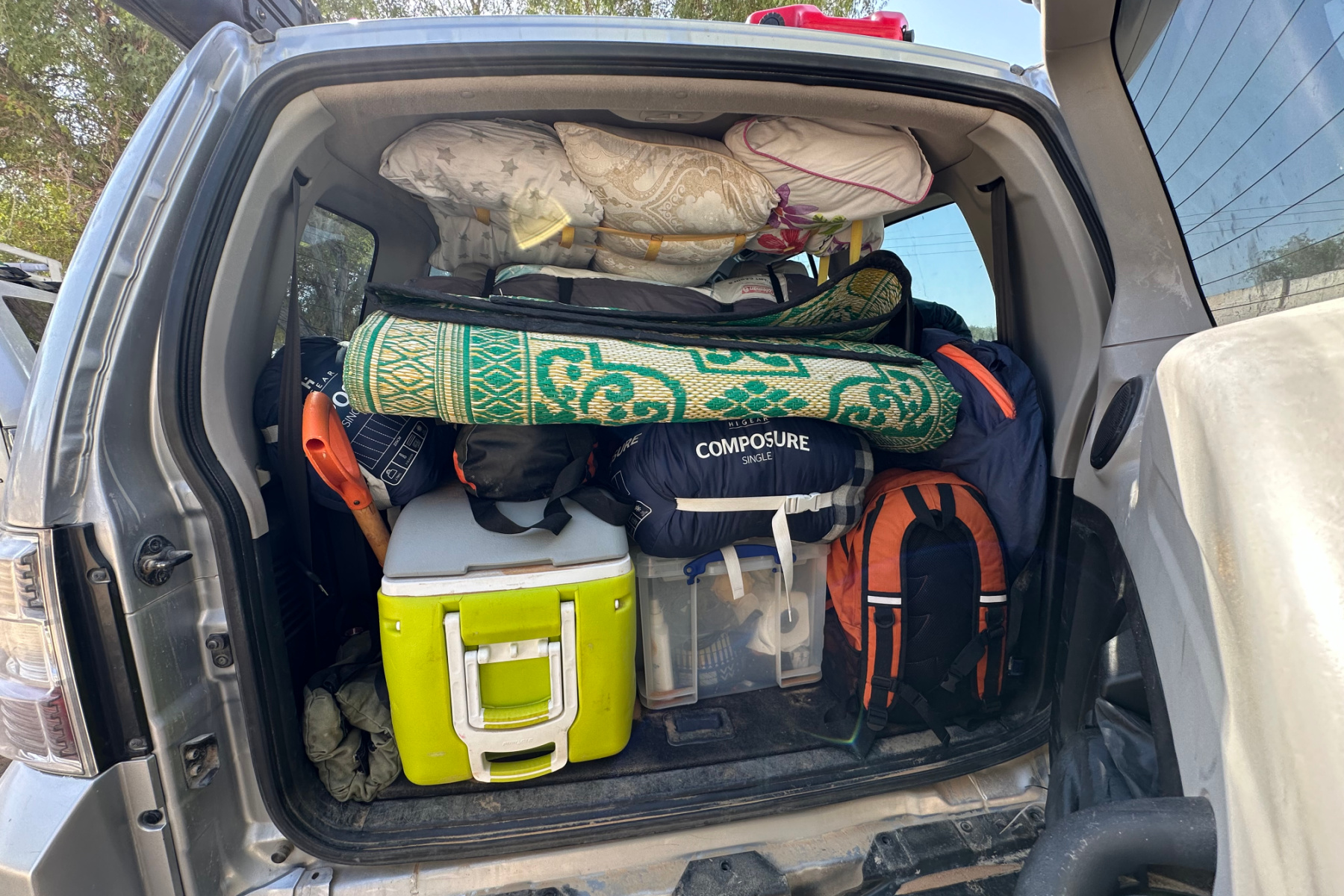
We had been camping in the week leading up to our off road desert adventure, so had all our wild camping equipment with us. Here’s some basic things to take in case you need to camp overnight in the desert:
- Enough water and food for a few days
- A sun shade or tarp and guide ropes for attaching it to your vehicle for temporary shelter
- A tent
- Camp beds
- Sleeping bags and pillows
- Camping fridge/cool box with ice
- Lighter
- Camping stove, pans and something to eat from
- Firewood
- First aid kit
- A warm jumper as desert nights can get cold
- A hat, long sleeved top and sun cream to protect you from the sun
Final thoughts on driving across Wahiba Sands desert

I doubt you have stumbled upon this post by chance. You’re probably looking for off road adventures in Oman or specifically for experiences of driving in Wahiba Sands and following the Bedouin Road.
If that’s the case, I hope you have found some useful information here. If you only take one thing from it, please let that be that this is not a journey to do with one vehicle. Not only is buddying up safer, it’s a lot more fun.

Thanks for your heaps of valuable information!!!! 🙂
Hi Michael, you are very welcome. I’m glad this post has been helpful. Claire